


Upfront carbon emissions from products that reduce operational emissions must be part of a project’s environmental profile.
Fresh out of university I landed a challenging and exciting role with a leading global insulation manufacturer. Over the course of a decade with the company, I learned a tremendous amount that shaped my career in terms of my values and the voice for change I wanted to have in the construction industry. A few years into the role, my wife and I had the opportunity to build a new home with a medium-sized production builder in Ontario, Canada (climate zone 5). It was a chance to implement my building science and enclosure knowledge and leverage skills I had learned while participating on the ecoEII Net Zero Energy Housing Demonstration Project with the National Research Council of Canada (NRCan).
The ecoEII project gathered five production home builders from across Canada to build net-zero energy market-ready homes with off-the-shelf materials. At the conclusion of the project, the builders had constructed 11 Net Zero Energy (NZE) single-family dwellings, one four-unit NZE rowhouse, one NZE Multi-Unit Residential Building (MURB) comprised of six units, and five Net Zero Energy Ready (NZER) houses. The houses represented an important step toward the broader goal of low operational–carbon houses and provided critical insight into how these homes could be constructed cost effectively. (The complete findings of the demonstration project can be found here.)
The recipe for a NZER or NZE house includes a building enclosure that: 1. incorporates optimized levels of insulation that limit thermal bridging, 2. achieves exceptional levels of airtightness, 3. uses low U-value windows, and 4. implements high-efficiency mechanical equipment. With this mind and with the builder’s support, my own NZER house was constructed in 2014 and featured the attributes noted in Table 1 below.
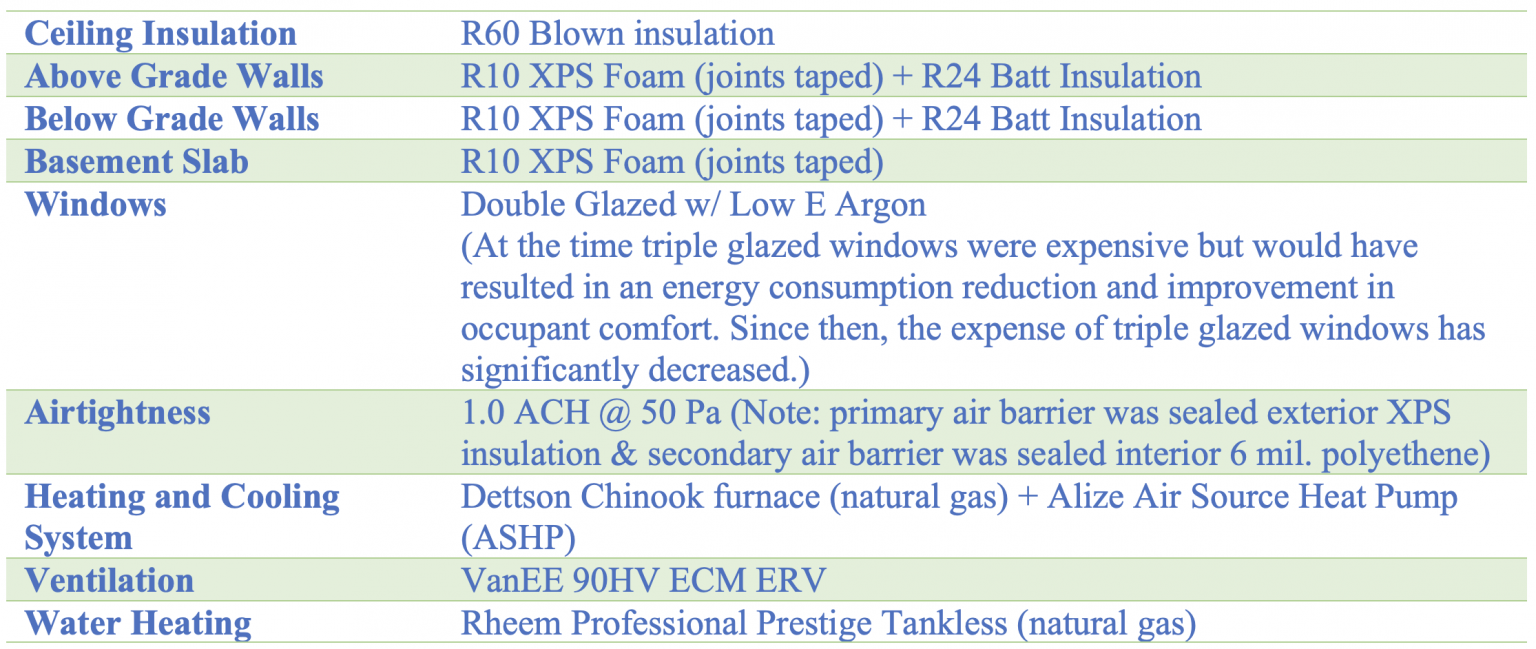
Table 1. Building enclosure and mechanical systems of a NZER house in climate zone 5 with heating degree days of 3460
Beyond Operational Energy
Based on the information so far, you may be asking, “How or where does this house fail from a sustainability perspective?” Before I answer that, let’s consider how sustainability is defined. In my opinion, sustainability is a matter of fulfilling the needs of the current generation without compromising the needs of future generations.
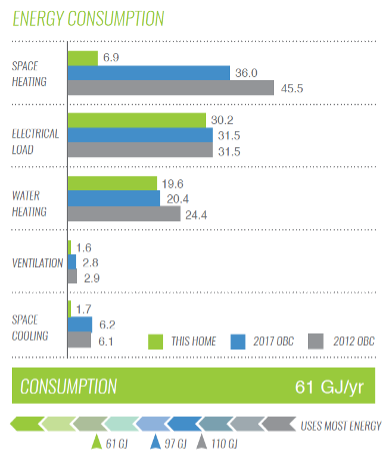
Figure 1. Comparative energy consumption modelling of NZER house using HOT2000
The NZER house that I constructed has low operational carbon, but at the time, there was no analysis of the embodied carbon. For a building to be considered sustainable, both the operational and embodied carbon must be low to reduce environmental impact. The three materials contributing to my NZER house’s high embodied carbon footprint are concrete, brick cladding, and XPS insulation (Figure 2).
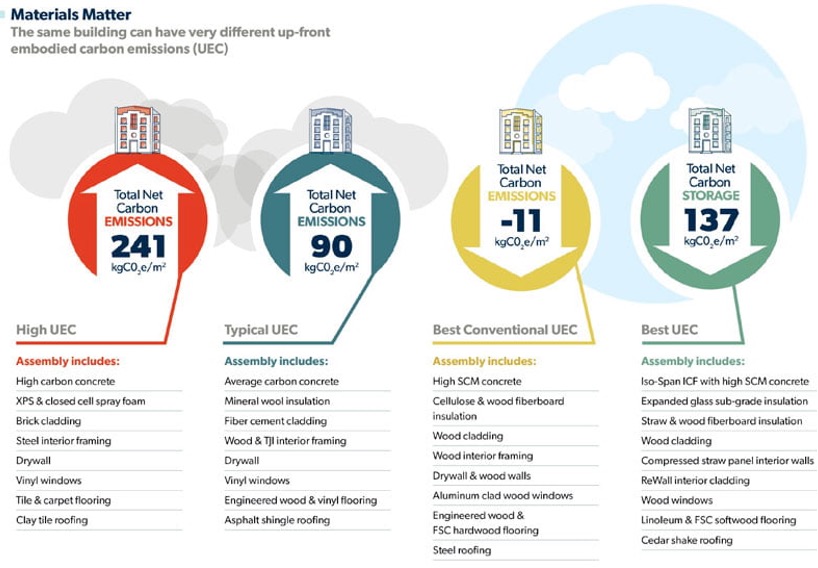
Figure 2. Source: Builders for Climate Action
There are alternative mixes available to reduce the embodied carbon of concrete; they include supplementary cementing materials (SCMs). The SCMs replace a portion of the Portland cement, which improves the environmental footprint of concrete by a reduction in the greenhouse gas emissions (GHG) and air pollutants. Often SCMs are by-products from other industrial processes, so by using these materials in concrete mixes, they are diverted from landfills. Bricks are also improving their environmental footprint with the introduction of manufactured materials that do not require high-temperature firing and that limit the use of materials such as Portland cement in the manufacturing process. If low-carbon bricks aren’t available in your market, alternative cladding options include fiber cement panels or carbon-capturing products such as wood or wood composite cladding (Figure 3).
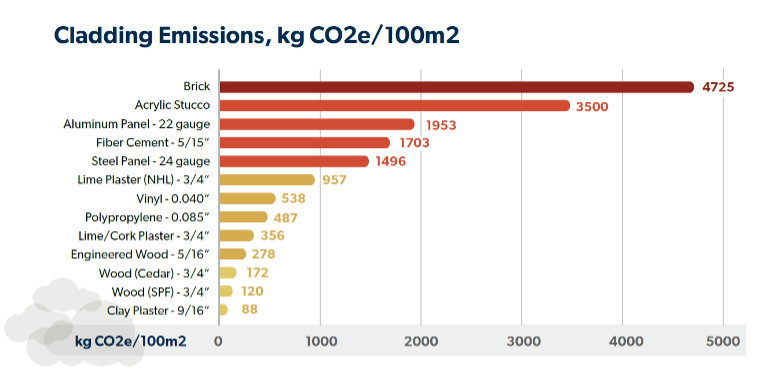
Figure 3. Emissions of cladding materials benchmark assessment for residential construction
The graphic in Figure 2 could be referencing the old formulation of XPS foam insulation, but is the new formulation any better and what is the difference between the two products? The older formula uses HFC-134a, whereas the new formulation is manufactured without HFC-134a or with a blend that limits the amount of HFC-134a.
Product availability depends on project location. As of January 1, 2021 the Environmental and Climate Change Canada prohibits manufacturing foam products that contain a hydrofluorocarbon (HFC) blowing agent. In the U.S., the Environmental Protection Agency (EPA) stated in 2015 that the use of HFC-134a would end January 1, 2021 but later retracted that mandate in favor of Proposed Rule 23, which was implemented under a program called Significant New Alternations Policy (SNAP). The EPA will accept the use of HFC-134a in three specific “blends.” It should be noted only one XPS manufacturer was leading the charge against the revision, while other XPS manufacturers noted they were able to comply producing a product without HFC-134a.
In summary, any XPS product manufactured and sold in Canada cannot contain HFC-134a, while certain states in the U.S. allow XPS to use a blend of HFC-134a while other states require XPS insulation that is HFC-134a–free.
Some questions need answering
o, how much better is the new XPS formulation than the old? How does a graphite expanded polystyrene rigid insulation (GPS) such as Halo Exterra by Logix Brands compare? And could it replace XPS foam insulation to achieve a truly sustainable solution for NZER or NZE housing?
Often individuals looking to build sustainable houses select expanded polystyrene (EPS) because its blowing agent, pentane, has a low global warming potential (GWP). GPS is simply EPS insulation that has been infused with graphite to enhance the products’ thermal resistance. The new XPS formulation reduced energy consumption during the manufacturing process by approximately 2.14 MJ (Table 2), a small but measurable amount.
Depending on the type of GPS insulation, the product will either have a substantially lower energy consumed during the manufacturing process than XPS insulation or a slightly higher value. For some reason the fresh water used in the manufacturing process increased by 0.09m3 moving to the new XPS formulation and represents a freshwater usage roughly 45 to 58 times higher than a GPS insulation.
As advertised by the XPS manufacturer, there was a significant reduction in the total GWP thanks to the removal of HFC-134a. However, the GWP of the new XPS insulation is still two to three times higher than an equivalent GPS insulation. Although improvements have been made to the formulation of XPS insulation, it still ranks at the top when comparing carbon emissions of various insulations (Figure 4).
Products impact environmental profile
Materials selection matters when designing and building sustainable houses, which should have low upfront and operational carbon emissions. Its emissions profile makes GPS insulation a respectable choice.
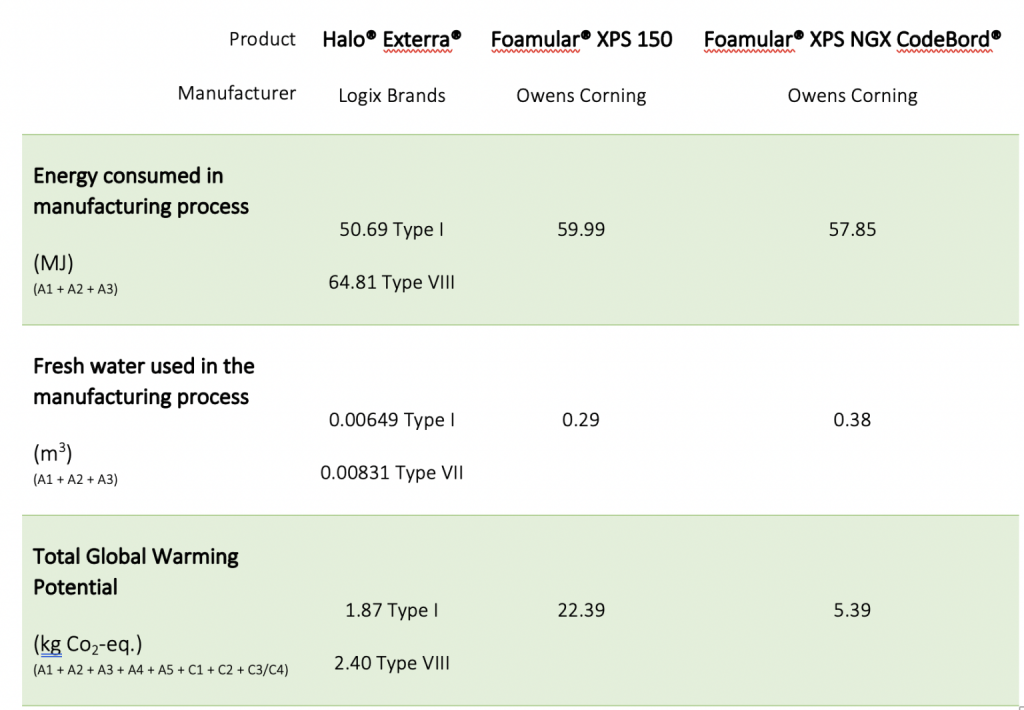
Table 2. EPD comparison: Halo Exterra vs. Owens Corning Foamular 150 vs. Foamular NGX CodeBord
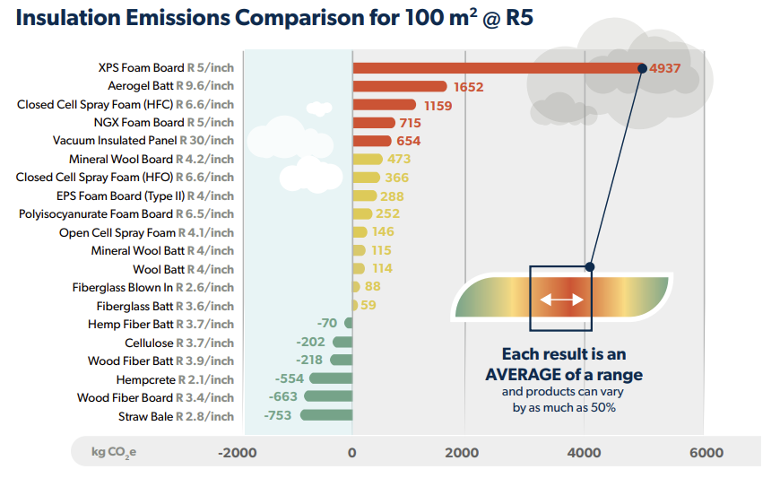
Figure 4. Emissions of Materials Benchmark Assessment for Residential Construction (EMBARC)
Within the last decade there has been an explosion in demand from construction industry stakeholders to quantify the environmental impact of manufactured products. These impacts can be considered on an individual product basis or on an industry-wide average from an environmental product declaration (EPD) report. This document tells a product’s lifecycle story from extraction of raw materials to end of life use; and it is a signal from a manufacturer or association representing various manufacturers that they are committed to measuring (and hopefully reducing) the environmental impacts of a product.
Unfortunately, EPDs are single documents for individual materials, and there’s no combined report that allows for quick comparisons of products. Thankfully, Builders for Climate Action have developed a tool called Building Emissions Accounting for Materials (BEAM). It calculates the approximate carbon emissions of a building based on typically spec’d materials and then shows how those emissions can be reduced through a selection of alternative materials.
Using the software is straightforward—it simply requires users to input the dimensions of their building (low-and mid-rise residential structures only); a comprehensive list of all available materials will populate for each building assembly. Each material has a carbon emissions value, which enables quick comparison between project-appropriate materials.
Final thoughts
My hope with this article is to shed light on the importance of constructing houses with low operational emissions from energy usage and reduced embodied carbon emissions from manufactured materials. As Chris Magwood notes, the building industry is good at reducing operational carbon emissions, but the industry needs to stop developing buildings with high embodied carbon. We must move toward low-carbon or carbon-storing materials over the next 5 to 10 years to combat issues inherent in climate change. EPDs and tools like BEAM help industry stakeholders evaluate and select low-carbon materials that can be incorporated into truly sustainable buildings that meet the needs of current and future generations.